What to Wear When Biking in Amsterdam: A Guide for Every Season
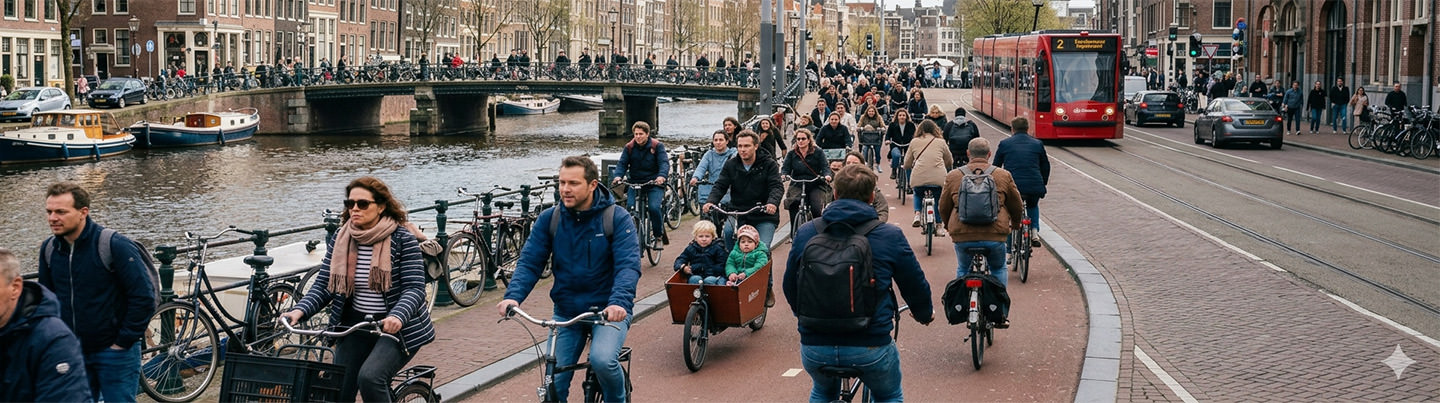
One of the first things you’ll notice when you arrive in Amsterdam is that almost nobody on a bike looks like they’re “out for a bike ride.” There are no helmets, no neon jerseys, no padded shorts. Instead, you’ll see locals pedalling past in suits, dresses, jeans, raincoats and everything in between — sometimes with a coffee in one hand and a phone in the other.
In Amsterdam, the bike is simply a way of getting around, not a hobby that requires special gear. The good news is, you almost certainly already own everything you need to fit right in.
Still, riding a bike in Amsterdam has its quirks. The weather can change in a heartbeat, the wind can be strong and provide quite a resistance to your pedal power, and getting caught out in the wrong outfit can turn a charming afternoon ride into a soggy one. Here is a season-by-season guide to dressing to explore Amsterdam by bike, no matter when you visit.
A Few Things to Know Before You Pack
Before getting into the seasons, there are a few things worth knowing about Amsterdam’s climate and cycling culture in general.
The first is that the weather here is famously unpredictable. Even in the height of summer, a bright morning can turn into a grey, drizzly afternoon, and vice versa. Locals dress in layers for a reason, and visitors who do the same will have a much better time.
The second is that wind is a much bigger factor than rain. The Netherlands is flat and exposed, and a brisk westerly can make a ride feel surprisingly chilly even on a mild day. A windproof outer layer is often more useful than a heavy coat.
And finally, comfort matters more than style, but you don’t have to choose between them. The Dutch have mastered the art of looking effortlessly put-together while cycling in regular clothes, and there is no reason you can’t do the same.
Spring (March to May)
Spring in Amsterdam is one of the most beautiful times to cycle. The tulips are out, the parks are in bloom, and the days are getting noticeably longer. But the weather is also the most unpredictable this time of year as you can easily experience sunshine, rain, and a chilly wind all in the same afternoon.
A good spring cycling outfit looks something like this:
- A light long-sleeved top — a cotton shirt, light jumper or breathable base layer.
- A windproof or water-resistant jacket — something packable that you can stuff in a bag when the sun comes out.
- Jeans, trousers or a longer skirt — anything you’d wear walking around the city is fine.
- Closed-toe shoes — trainers or flat boots are ideal. Pedals can be slippery in the rain, and sandals are best avoided.
- A scarf or light gloves for early spring — March can still be quite cold, particularly in the mornings.
If you’re cycling in the early spring, don’t be fooled by the sunshine. The wind off the canals can still be biting, and a thin layer underneath your jacket goes a long way.
Summer (June to August)
Summer is the busiest cycling season in Amsterdam, and for good reason. The days are long, the parks are full, and the city feels alive. Temperatures usually sit somewhere between 18 and 25 degrees Celsius, warm enough to be pleasant on a bike, but rarely uncomfortably hot.
For most summer days, you can wear pretty much whatever you’d wear sightseeing on foot. A few small adjustments make life on a bike easier:
- Breathable, loose-fitting clothing — cotton or linen shirts, light dresses, shorts, or summer trousers.
- Sunglasses — surprisingly important. The light reflecting off the canals can be very bright, and the bike paths often run right along the water.
- Sunscreen — easy to forget when there’s a breeze, but a long ride in the open countryside can lead to a serious sunburn.
- A small bag with a packable rain jacket — even in July, sudden showers are common.
A note on dresses and skirts: many visitors worry about cycling in them, but with a typical upright Dutch bike, it really is no problem. The step-through frame is designed for exactly this, and it’s a big part of why Dutch cycling has its distinctive look.
Autumn (September to November)
Autumn is a quietly lovely time to cycle in Amsterdam. The summer crowds thin out, the leaves turn gold, and the air takes on that crisp quality that makes a long ride along the Amstel feel particularly satisfying. It is also, however, when the rain starts to settle in for longer stretches.
For autumn, think layers and waterproofing:
- A warm base layer — a long-sleeved shirt or light jumper.
- A proper waterproof jacket — a poncho, raincoat or cycling-specific shell. This is the season when it really earns its place in your bag.
- Long trousers — jeans or chinos are fine, but consider water-resistant fabrics if rain is in the forecast.
- A scarf or light hat — warmth around the neck makes a noticeable difference once the temperatures dip.
- Closed shoes with a good grip — wet leaves on a bike path can be surprisingly slippery.
By late autumn, you may also want to add gloves to your kit. Cold hands on a bike become uncomfortable very quickly, and a basic pair of cotton or knit gloves is more than enough for most rides.
Winter (December to February)
Yes, people really do cycle in Amsterdam in the winter. Locals pedal to work in temperatures hovering around freezing, and visitors who give it a go are often pleasantly surprised at how doable it is. The trick is dressing properly — once you’re warm and dry, a winter ride along the canals can be one of the most magical ways to experience the city.
A typical winter cycling outfit might include:
- A warm base layer — a thermal top or thick long-sleeved shirt.
- A jumper or fleece — for an insulating mid-layer.
- A windproof, waterproof winter coat — this is the most important piece. Wind-chill on a bike makes a big difference, and a good coat will block both wind and rain.
- Long trousers — jeans are fine for short rides, but warmer fabrics are more comfortable for longer trips.
- Warm gloves — ideally waterproof or water-resistant. Wet, cold hands are the quickest way to ruin a winter ride.
- A hat or earband — fits easily under a helmet if you’re wearing one, and traps a lot of warmth.
- A scarf — both practical and very Dutch.
Snow is rare in Amsterdam, but icy mornings do happen. If the bike paths look frosty, take it slow, give corners and bridges a wide berth, and don’t be afraid to walk your bike across the trickier patches. Locals do exactly the same.
What About Helmets?
This is one of the most common questions visitors ask, and the honest answer is that almost no one in Amsterdam wears one. Cycling here is generally considered very safe, thanks to the dedicated bike lanes, low speeds, and the fact that drivers are extremely accustomed to looking out for cyclists.
That said, wearing a helmet is a perfectly reasonable choice, particularly for visitors who aren’t used to navigating busy bike traffic. Most rental shops can provide one for a small additional fee, just ask when you pick up your bike. There is no shame in it, and no one will give you a second look.
A Few Things to Leave at Home
For most visitors, the standard cycling-tourist mistake is overdressing. Specifically, you don’t need:
- Lycra cycling kit — completely unnecessary for city riding, and you’ll feel a bit conspicuous.
- Cycling shoes with cleats — rental bikes have flat pedals.
- A backpack full of gear — a small bag with a rain jacket, water bottle and your essentials is plenty.
- Heavy hiking boots — too stiff and clunky for the relaxed pace of Amsterdam riding.
The whole spirit of cycling in Amsterdam is that it’s ordinary. You’re not training, you’re not racing, you’re not setting off on an expedition. You’re just getting from one canal to the next, with a stop at a café in between.
Final Thoughts
The best advice anyone can give a first-time visitor is to dress for the city, not the bike. Whatever you’d wear walking around Amsterdam, you can almost certainly wear on two wheels, with a rain jacket added just in case.
If there is a single piece of cycling-specific advice worth following, it is this: pack a layer you weren’t sure you’d need. The wind picks up, the sun goes down, the drizzle starts, and you’ll be very glad to have it. The locals always do.
Beyond that, relax and enjoy yourself. Half the charm of cycling in Amsterdam is how unceremonious it all is. Hop on, pedal off, and, join the rest of the city doing exactly the same thing.
Leave a Reply